Childhood Wounds & The Impact on Adult Relationships
Sep 06, 2026Talysha Reeve
Once might be luck, twice might be coincidence, beyond that, it's a pattern.
There's typically two ways we land ourselves in the world of learning about attachment styles;
1) We've experienced a mind-bending breakup that threw our world into chaos, and we're trying to make sense of someone's behaviour.
2) We've begun recognising patterns in ourselves, often playing out across multiple relationships and we're trying to find out how to break this pattern.
and sometimes, it's both.
Today, we're building a foundational understanding of how childhood wounds show up in adult relationships.
The purpose of these blogs are to help people understand themselves, their body, and their relationships.
I will always do my best to explain as much of the complexities in simple, easy-to-understand ways. If you ever have any questions about this content or would like to find out about working with me, please get in touch
Attachment styles are a part of the puzzle, but there's a lot more to it than that. We have our insecure attachment styles; anxious, avoidant, and fearful avoidant. Then, we have a blueprint sitting underneath the attachment styles. In psychology, we call these blueprints schemas.
Once we can identify and see them, it opens up a huge avenue to better understand ourselves, our relationships, and what we've brought with us from childhood - that can be unconsciously working against us and our relationships.
In this post, I'll unpack what schemas are, how they form, and how they connect to our attachment style. Then we'll look at the core wounds most commonly linked to each insecure attachment style, setting us up for a deeper dive into each style soon.
What this isn't
Before we go further, some important guardrails.
Understanding our schemas is not the same as diagnosing ourselves, or anyone else. Schemas are beliefs that shape relational patterns, they are not personality disorders, and nothing in this post is a diagnostic tool.
Also, importantly, knowing why we shut down or why we cling, gives us a place to start healing from. It's not a free pass to keep hurting the people around us.
What is a Schema?
Schemas (referred to as early maladaptive schemas, or EMS) are broad, deep patterns of beliefs we hold about; ourselves, other people, and the world. They form early, most often in childhood, when a core emotional need isn't met consistently (1).
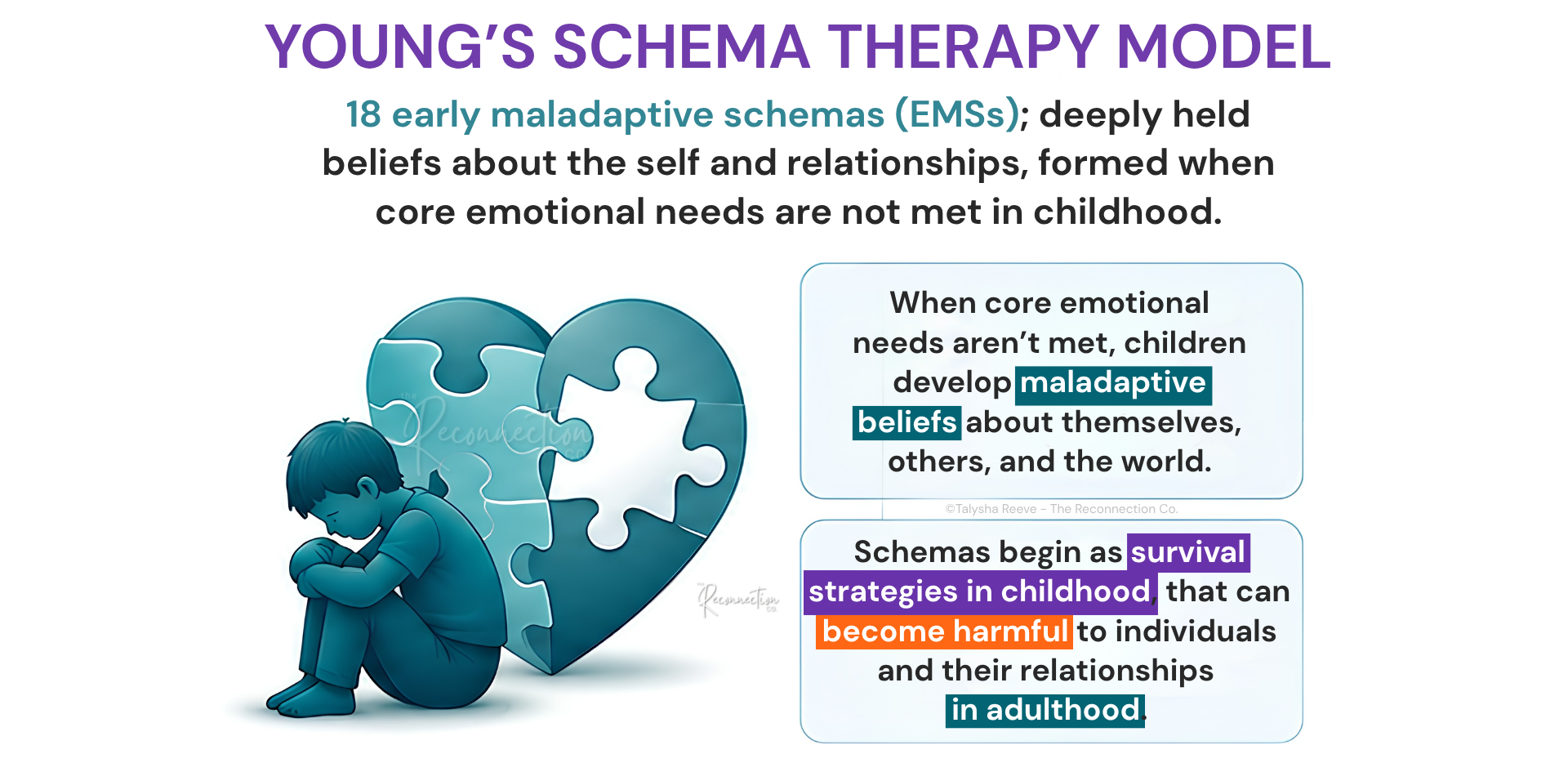
Schemas influence how we view, interpret, and respond to the world, especially when it comes to relationships: how safe or valued we feel, what we interpret certain behaviours from people to mean, what people's intentions are etc... Essentially, the beliefs and assumptions we hold about our lived experience. Because schemas are deeply held, they're not just passing thoughts, they are experienced as a felt truth - even if the reality of a situation is different.
Essentially, schemas are the blueprint of our Childhood Wounds
Schemas aren't only a person's thoughts. They also carry feelings, body sensations, and memories, with them all fused together (2). This is why a certain tone of voice, a facial expression, a delay in a text reply, or a phrase someone says can flood us with feelings that may be well out of proportion to what's actually happening in the present moment.
When this happens, it's rarely a conscious overreaction or a person being intentionally 'dramatic'. It's often a system responding to all of the past experiences that led to, and reinforced, the interpretation about what's happening in front of them in the present moment.
Schemas - Blueprints of Childhood Wounds
When we talk about 'childhood wounds', schemas and what led to their development are largely what we are referring to.
When early caregivers and the environments a person grew up in were inconsistent, lacked nurturing, were unpredictable, or were unsafe, a child will develop emotional survival strategies.
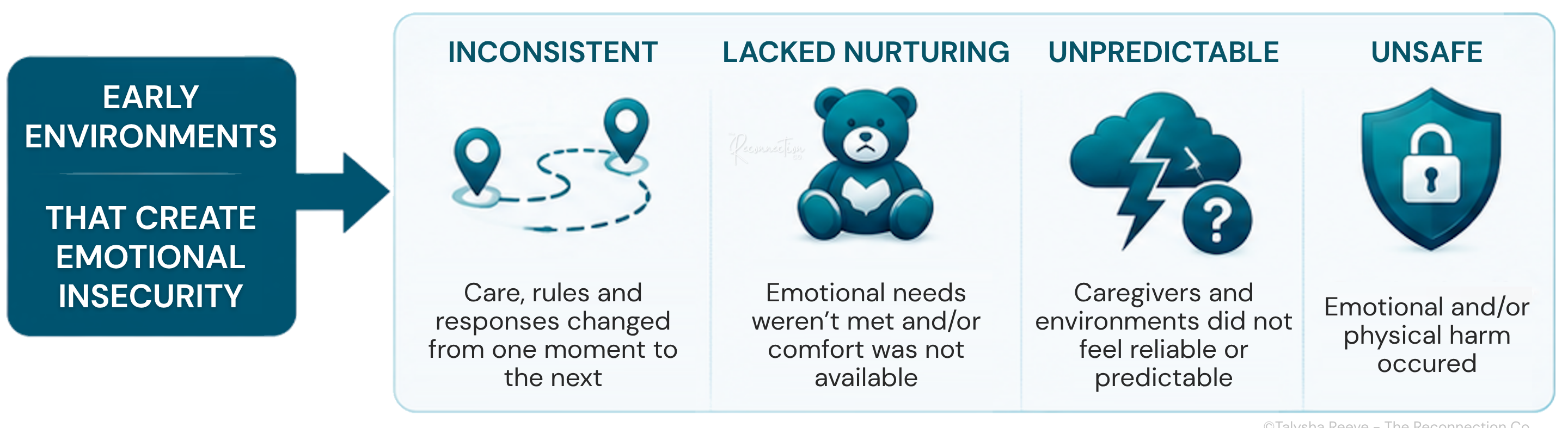
Emotional survival strategies are psychological adaptations and defences that develop to make existing in an environment we can't escape from tolerable and survivable. 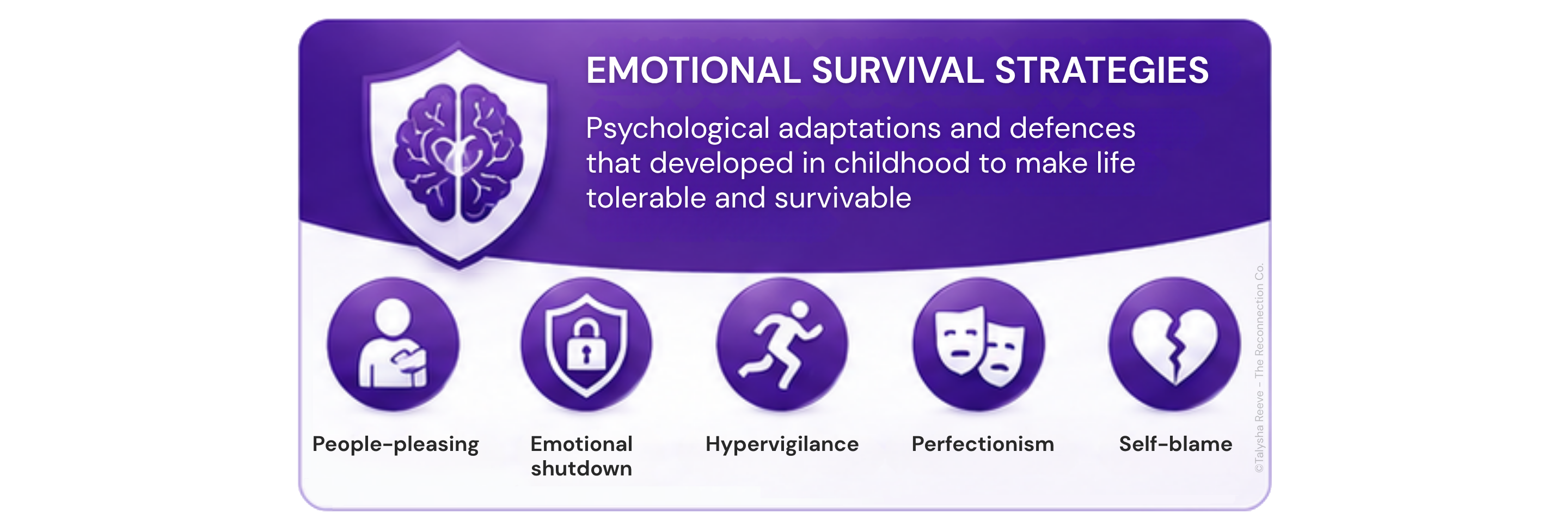
The problems arise when a person moves into adulthood and the wounds are still active under the surface. A person may no longer be in the same emotionally and/or physically unsafe environment, but the emotional survival strategies don't know that - so they follow them.
Schemas
There are eighteen identified schemas that fall into five broad domains; disconnection & rejection, impaired autonomy & performance, impaired limits, other-directedness, and overvigilance & inhibition.
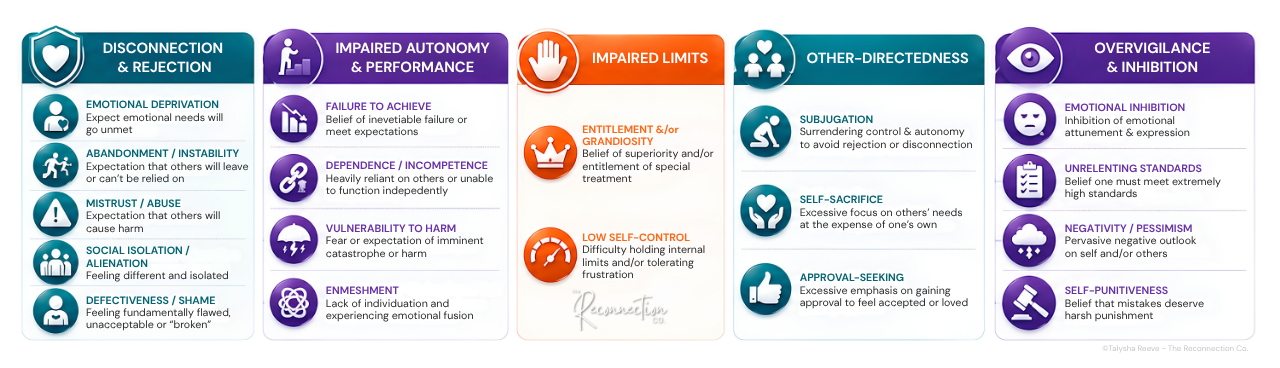
Disconnection & Rejection
Emotional Deprivation: Expect emotional needs will go unmet.
Abandonment / Instability: Expectation that others will leave or cant be relied on.
Mistrust / Abuse: Expectation that others will cause harm.
Social Isolation / Alienation: Feeling different and/or isolated.
Defectiveness / Shame: Feeling fundamentally flawed, unacceptable, or "broken".
Impaired Autonomy & Performance
Failure to Achieve: Belief of inevitable failure or meet expectations.
Dependence / Incompetence: Heavily reliant on others or difficulty functioning independently.
Vulnerability to Harm: Fear or expectation of imminent catastrophe or harm.
Enmeshment: Lack of individuation and experiencing emotional fusion.
Impaired Limits
Entitlement &/or Grandiosity: Belief of superiority and/or entitlement of special treatment.
Low Self-Control: Difficulty holding internal limits and/or tolerating frustration.
Other Directedness
Subjugation: Surrendering control and autonomy to avoid rejection or disconnection.
Self-Sacrifice: Excessive focus on others' needs at the expense of one's own.
Approval-Seeking: Excessive emphasis on gaining approval to feel accepted or loved.
Overvigilance & Inhibition
Emotional Inhibition: Inhibition of self-emotional attunement and expression.
Unrelenting Standards: Belief one or others must meet extremely high standards.
Negativity / Pessimism: Pervasive negative outlook on self, life, and/or others.
Self-Punitiveness: Belief that one's mistakes deserve harsh punishment.
How Maladaptive Schemas Develop
We're not born holding negative beliefs about ourselves, about others, and the world - these negative beliefs are created (3).
Just like how a child physically grows and develops, they are also emotionally growing and developing too. If we think of physical growth and development; a child needs sufficient calories and nutrients to grow and develop. If they don't get enough calories or healthy nutrients, physical growth is impaired.
If their nutritional needs are mostly and fairly consistently met, there's no real negative impact on their growth and development. However, if their nutritional needs are inconsistently met or unmet, then their growth and development can be impaired, and the effects can follow them throughout the rest of their lives. Emotional needs are no different.
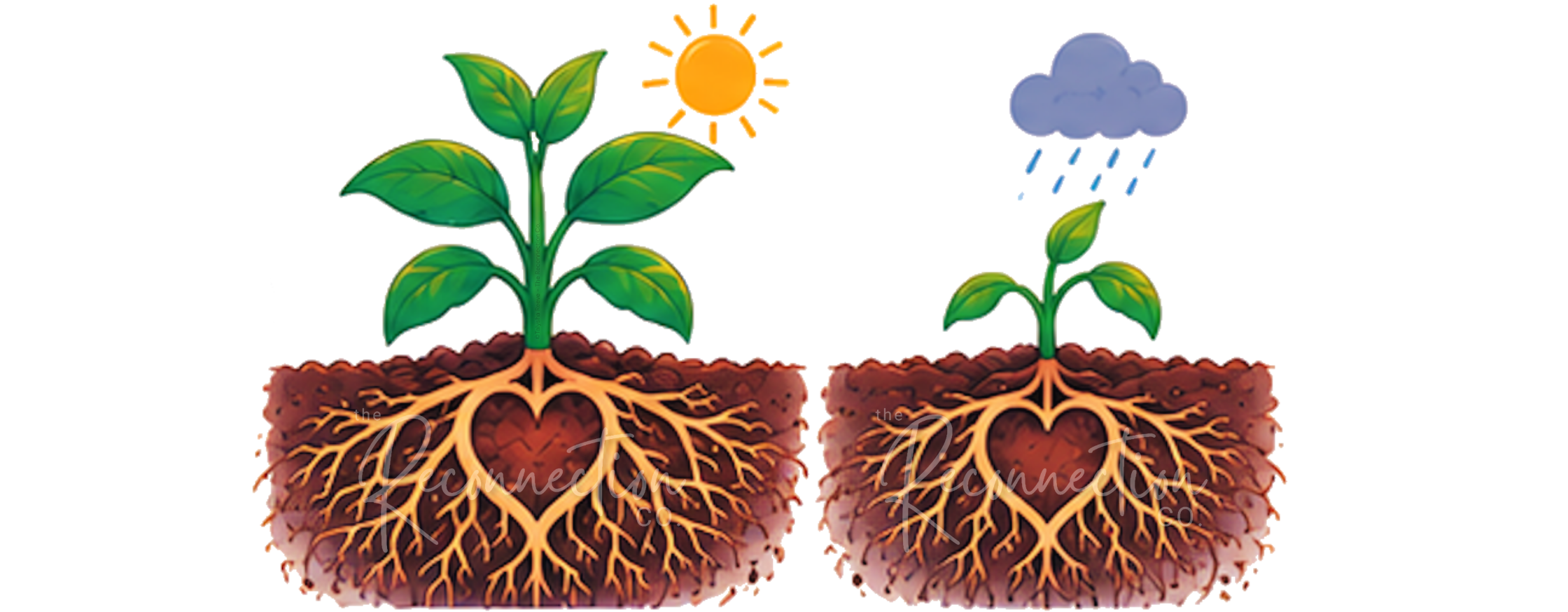
Every child has core emotional needs that are required for their emotional growth and development. When these needs are met, they are given the best chance of healthy development. When these needs are either inconsistently met or unmet, their emotional growth and development is impacted.
Core Emotional Needs
There are a number of core emotional needs that a child has: safety and nurturing, autonomy and competence, freedom to express needs and feelings, spontaneity and play, and realistic limits (1).
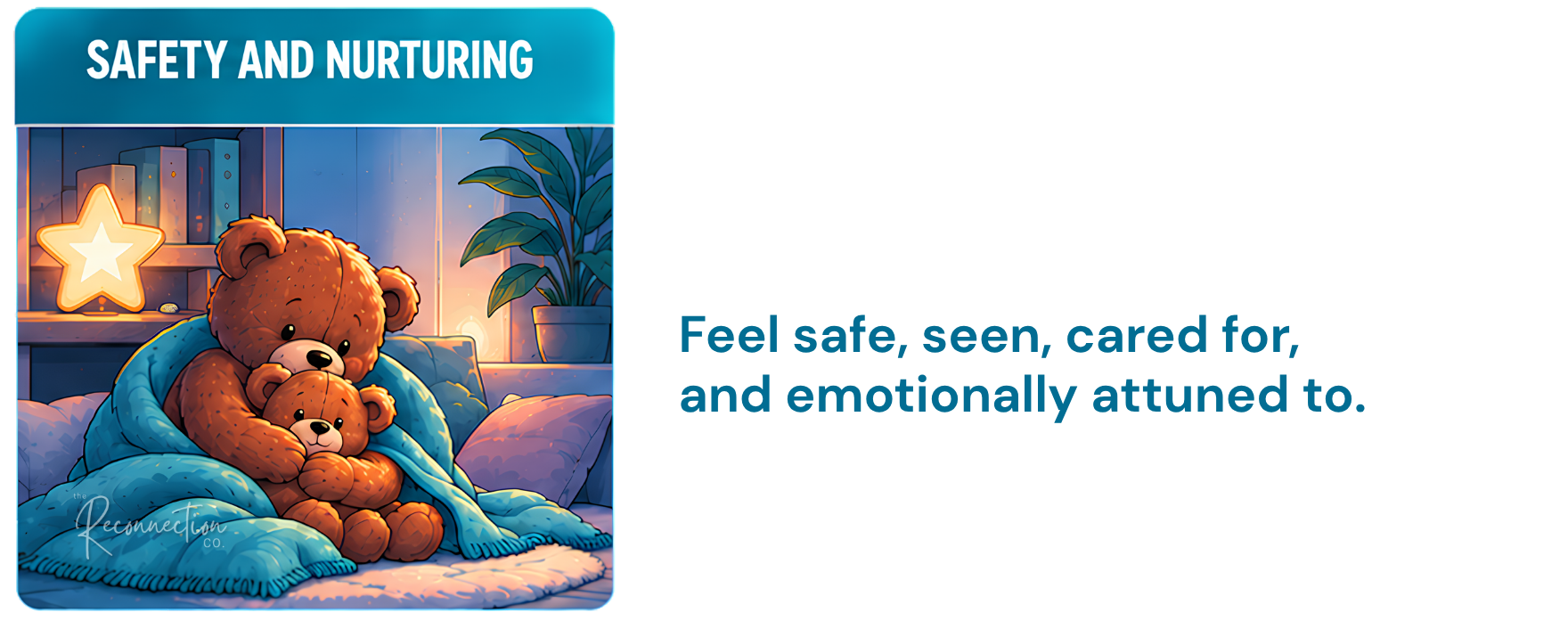
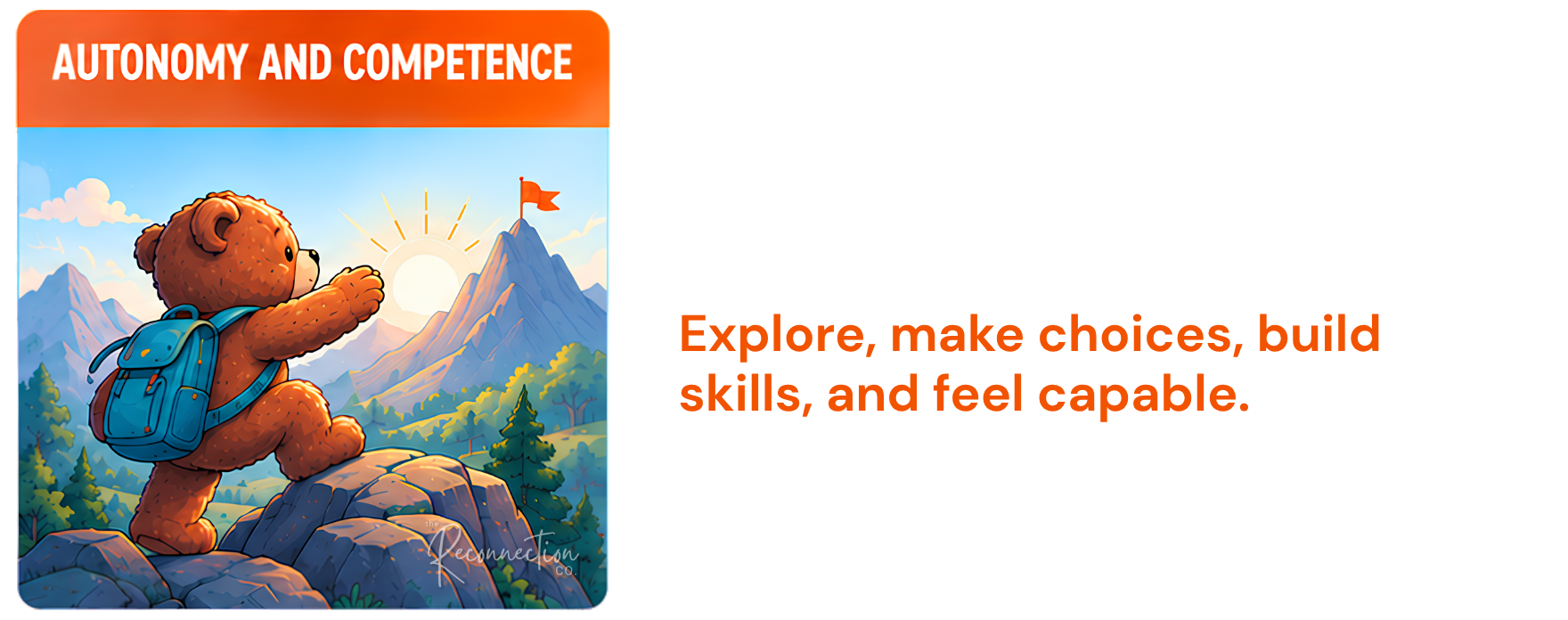
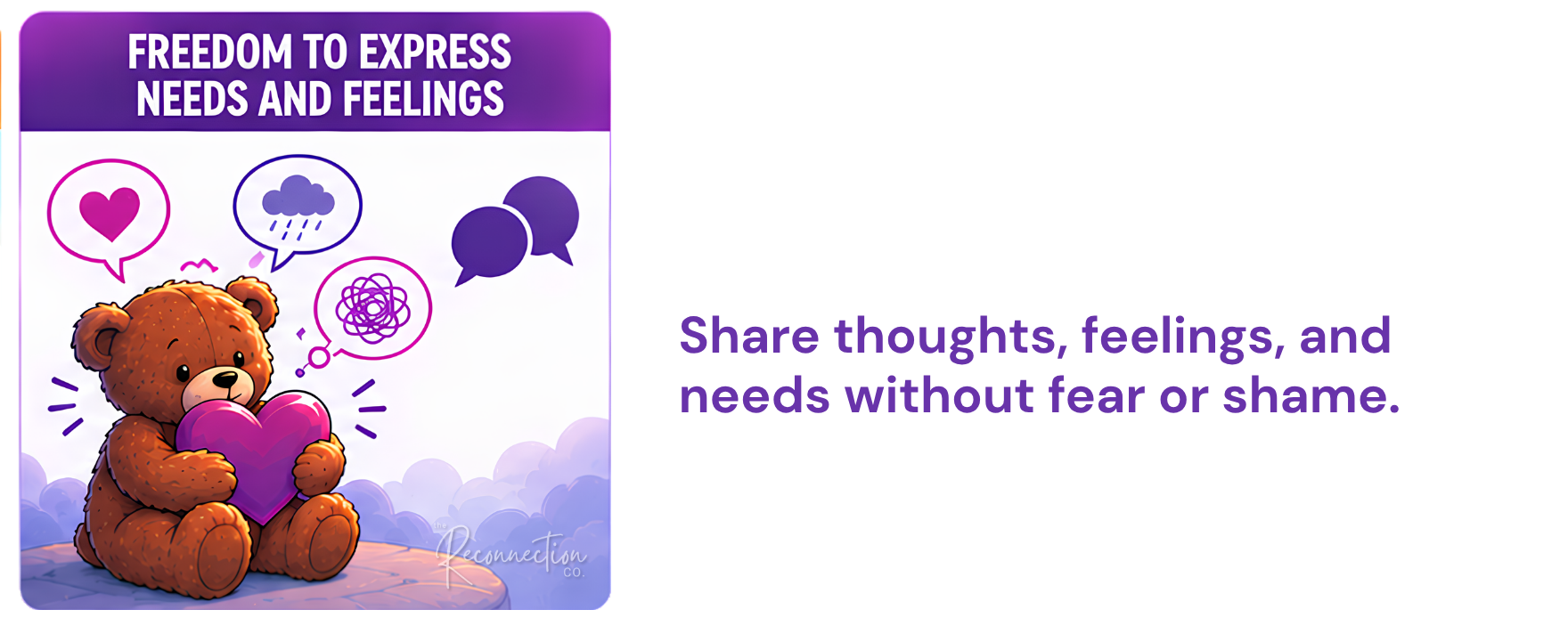
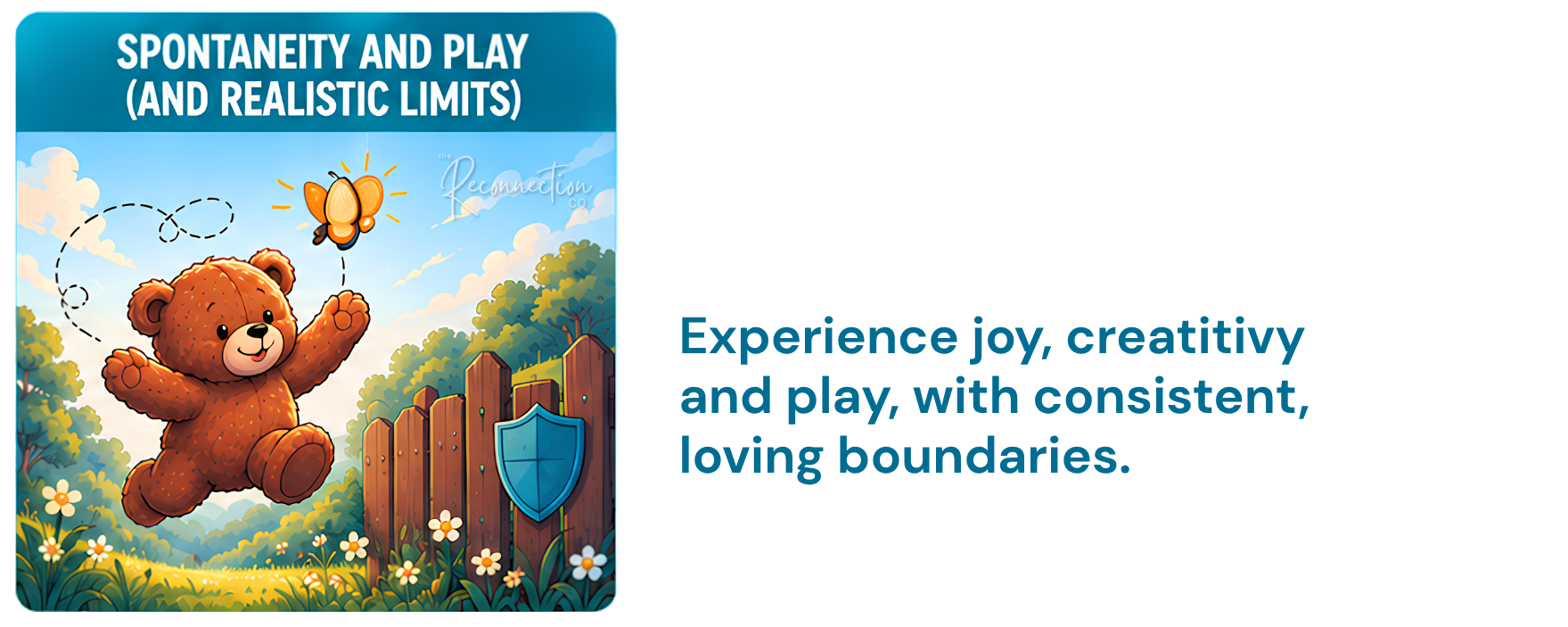
The development of each 'wound' or early maladaptive schema is directly related to core emotional needs that weren't fully met in childhood (1).
Types of Childhood Adversity
Schema theory proposes that Early Maladaptive Schemas (EMS) develop as a result of how an individual child's temperament interacts with the four types of childhood adversity that they may experience;
1. Toxic frustration of needs (e.g., lack of love).
2. Trauma and victimisation (e.g., physical abuse).
3. Overprotection and overindulgence.
4. Selective internalisation or identification with a parent's feelings or behaviors.
(1,4)
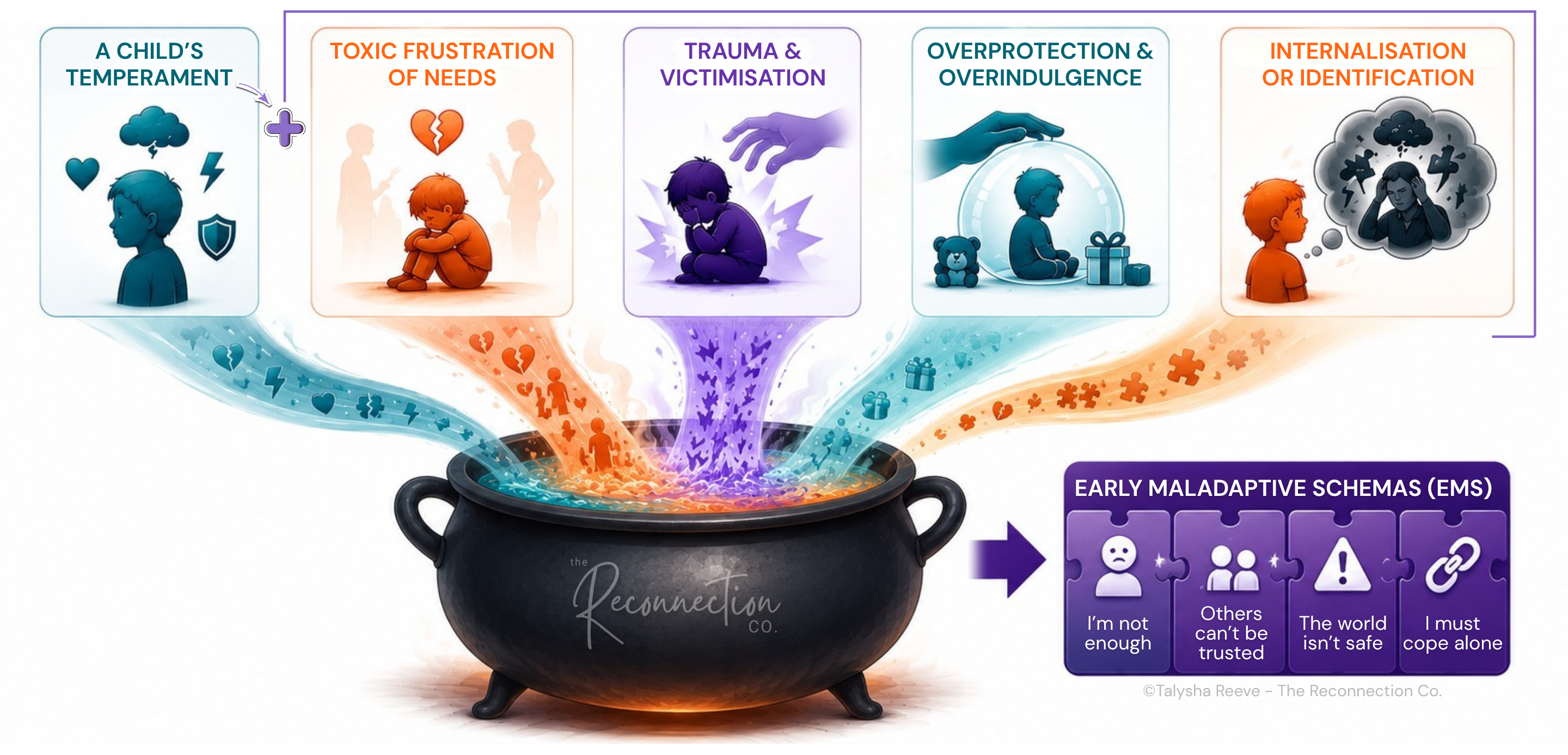
The research is consistent on one point in particular. Across many independent studies, four broad wounds show up again and again as the direct legacy of inadequate caregiving: abandonment, rejection, shame, and a diminished sense of self-worth (5). Chronic emotional absence can teach a child they're not worthy or wanted. That expectation becomes shame. If left unaddressed, shame becomes toxic, and it becomes the quiet voice telling a person they're fundamentally too much or not enough (6).
How Schemas Relate to Attachment Styles
Attachment Theory and Schema Theory both look at how childhood experiences shape our life experiences, especially when it comes to relationships - but they differ in what they focus on and describe.
Attachment theory focuses on how early caregiving shapes emotional bonds, relational safety, and how our system responds to both.
Schema theory focuses on how childhood experiences shape how we view, interpret and respond to the world.
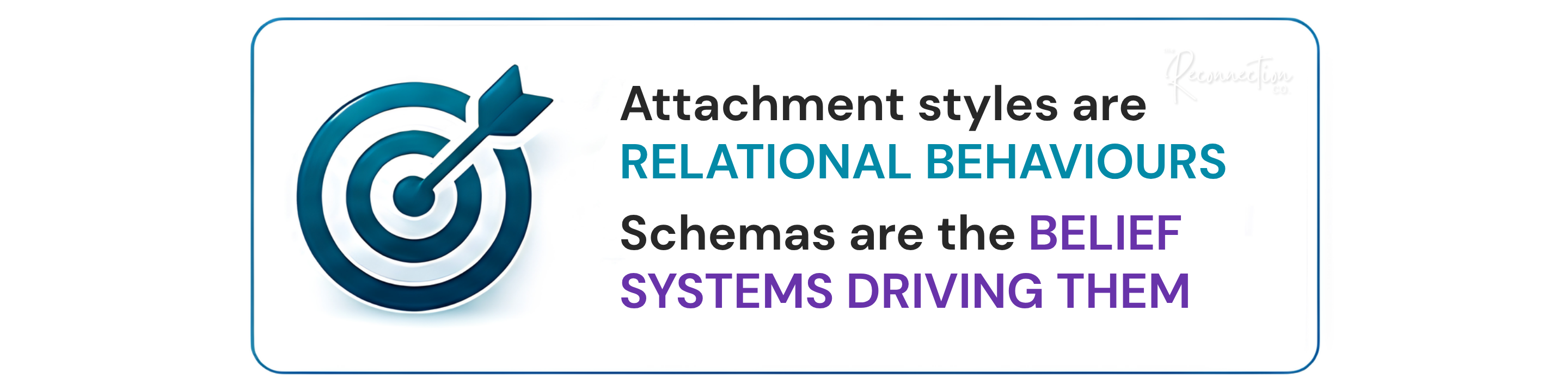
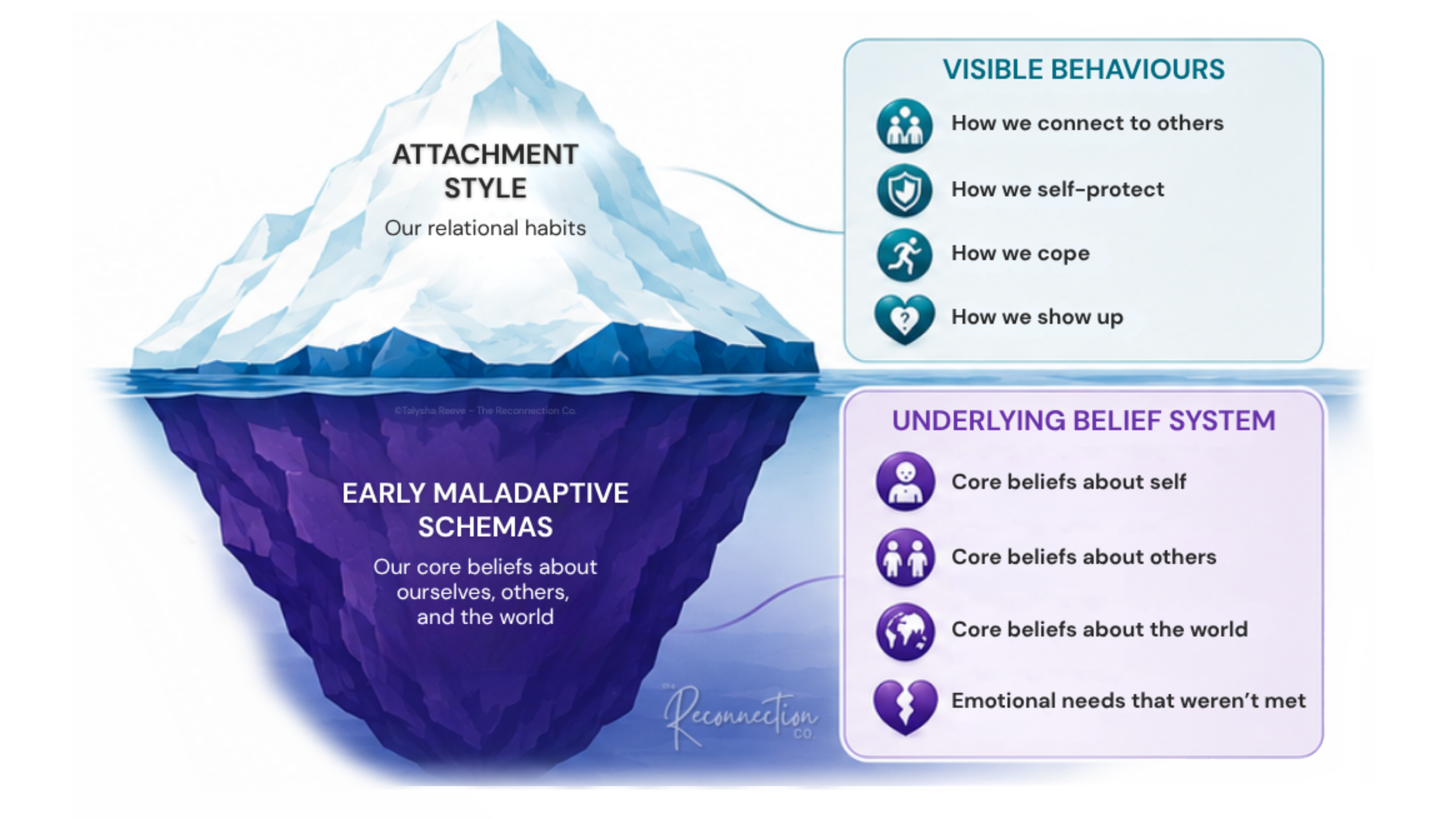
Essentially, our attachment style influences a lot of our outward relational behaviour, and our schemas are the belief systems driving that behaviour - there is more nuance to it than this, but for now, that paints a clear enough picture of where they sit in out system.
For example, all of the insecure attachment styles can have an abandonment wound, but when that wound is activated, the attachment style will influence what direction a person will move in - toward connection (anxious), away from connection (dismissive avoidant), either (fearful avoidant), or against connection (fearful avoidant).
The relationship between insecure attachment styles and schemas are well established, and clearly identified in psychology research. Insecure attachment in childhood predicts a wider spread of schemas following an individual into adulthood. (8)
When research has compared adult attachment styles directly, a relatively clear pattern emerges;
Fearful Avoidant Attachment Styles
Will tend to have more schemas present compared to an anxious or avoidantly attached individual, and the severity of the schemas present will tend to be more severe too. As this attachment style combines high anxiety with high avoidance, it produces the broadest and most intense schema activation of the three. (7)
Anxious Attachment Styles
Follow quite closely behind FAs, in the sense that they can develop a very broad range of schemas, they just tend to have less than an individual with a fearful avoidant attachment style and/or the schema's presentation can be less pervasive. (7)
Avoidant Attachment Styles
Tend to show a more consistent, narrower EMS pattern when compared to the other two attachment styles. This doesn't mean that their schemas or wounds are any less painful or disruptive to their relationships, they're just more consistent in how they present. (7)
The main take-away: our attachment style isn't the root cause of a behaviour. It's the visible behaviour sitting on top of a deeper relational blueprint and belief system.
The Core Wounds Associated with each Attachment Style
Whilst each and every person can have any combination of schemas present, there are some schemas that are more commonly associated with the different insecure attachment styles.
Below are the most common early maladaptive schemas (EMS) associated with each of the insecure attachment styles.
Anxious Attachment
The fear of being abandoned or rejected
An individual with an anxious attachment style tends to hyperactivate, meaning the nervous system stays on high alert for signs of rejection or disconnection. The wounds most tied to this style circle around abandonment threat and reassurance: (13,14)
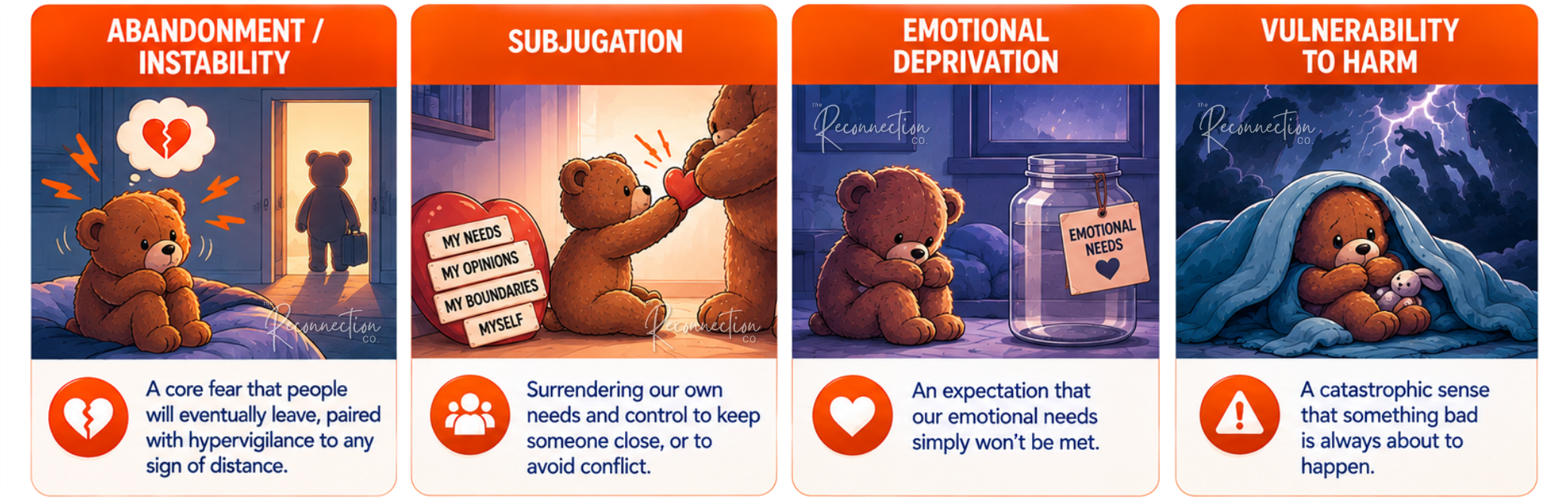
Abandonment/instability: A core fear that people will eventually leave, paired with hypervigilance to any sign of distance.
Subjugation: Surrendering one's own needs and control to keep someone close, or to avoid conflict.
Emotional deprivation: An expectation that our emotional needs simply won't be met.
Vulnerability to harm: A catastrophic sense that something bad is always about to happen.
In everyday life, this can look like reading a delayed reply as rejection, or agreeing to things we don't want because saying no feels too risky.
Avoidant Attachment
Protective retreat into self-reliance
Avoidant attachment tends to deactivate, meaning the nervous system learns to switch off attachment needs rather than escalate them. The wounds here are less externally visible, but no less painful to experience: (13,14)
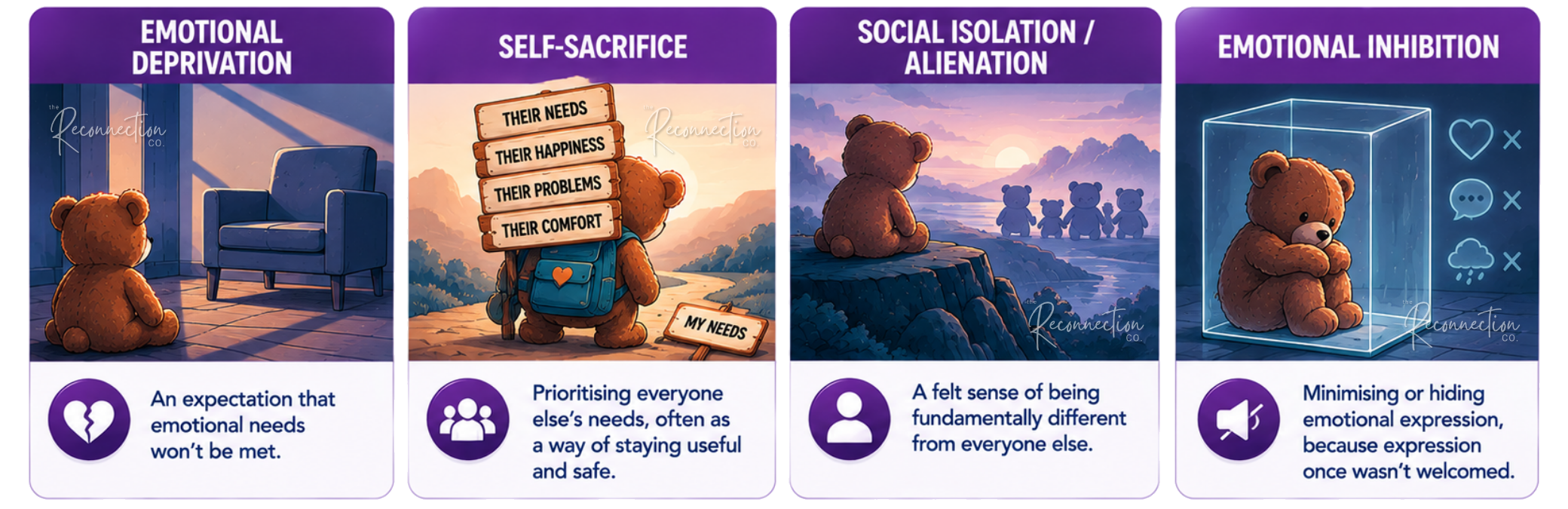
Emotional deprivation: Caregivers were experienced as unavailable, so the child adapted by expecting less
Self-sacrifice: Prioritising everyone else's needs, often as a way of staying useful and safe
Social isolation/alienation: A felt sense of being fundamentally different from everyone else
Emotional inhibition: Minimising or hiding emotional expression, because expression once wasn't welcome
In everyday life, this can look like pulling away right when a relationship gets close, or feeling numb in moments that call for vulnerability.
Fearful Avoidant Attachment
The conflict of wanting and fearing closeness
Fearful avoidant attachment combines both patterns above, wanting connection deeply while also expecting it to hurt. This is why it's linked to the broadest wound activation of the three insecure styles, with elevated levels across eleven of the eighteen identified schemas (7). The fearful avoidant attachment style is associated with every schema listed above, in addition to this style being particularly marked by:
Mistrust/abuse: an expectation that others will use closeness to cause harm
Defectiveness/shame: a core belief of being fundamentally flawed or unlovable
Negativity/pessimism: a pervasive expectation that things will go wrong
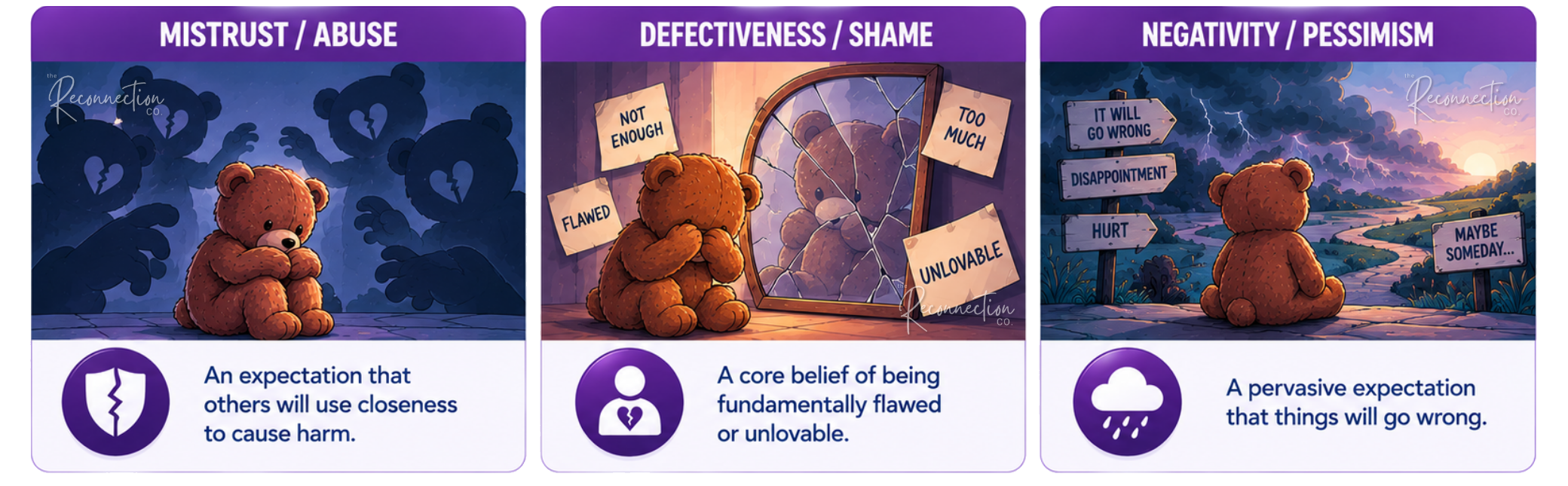
In everyday life, this can look like pulling someone close and then pushing them away in the same breath, caught between two very old, very valid fears.
A Final Note
The work isn't about finding a label and stopping there. A wound is a starting point for understanding, not an excuse - nor are they a life sentence. There are a number of very effective interventions that can help a person heal, grow, and develop secure ways of relating - particularly when the work targets the specific beliefs driving the distress rather than trying to treat everything at once (15).
A few questions worth sitting with:
Which of these wounds feels most familiar when I think about my closest relationships?
Where do I notice this wound showing up as a feeling in my body, not just a thought?
What did I need as a child that I didn't get, and what would it look like to offer myself some of that now?
Depending on a person's presentation, there are many instances where behavioural awareness and attachment coaching can be very helpful. In other instances a person may need more support from a mental health professional.
If you have any questions or would like to learn more about working with me, reach out via [email protected]
References
1. Arntz, A., Rijkeboer, M., Chan, E., Fassbinder, E., Karaosmanoğlu, A., Lee, C. W., & Panzeri, M. (2021). Towards a Reformulated Theory Underlying Schema Therapy: Position Paper of an International Workgroup. Cognitive Therapy and Research, 45, 1007-1020.
2. Pilkington, P., Karantzas, G., Faustino, B., & Pizarro-Campagna, E. (2023). Early maladaptive schemas, emotion regulation difficulties and alexithymia: A systematic review and meta-analysis. Clinical Psychology & Psychotherapy.
3. May, T., Younan, R., & Pilkington, P. (2022). Adolescent maladaptive schemas and childhood abuse and neglect: A systematic review and meta-analysis. Clinical Psychology & Psychotherapy, 29, 1159-1171.
4. Bär, A., Bär, H. E., Rijkeboer, M., & Lobbestael, J. (2023). Early Maladaptive Schemas and Schema Modes in clinical disorders: A systematic review. Psychology and Psychotherapy.
5. Frankel, J. (2023). Treating the sequelae of chronic childhood emotional abandonment. Journal of Clinical Psychology.
6. Marici, M., Clipa, O., Runcan, R., & Pîrghie, L. (2023). Is Rejection, Parental Abandonment or Neglect a Trigger for Higher Perceived Shame and Guilt in Adolescents? Healthcare, 11.
7. Yu, J., Osback, C., & Bekerian, D. A. (2026). The interplay of attachment styles and early maladaptive schemas across different populations. BMC Psychology, 14.
8. Simard, V., Moss, E., & Pascuzzo, K. (2011). Early maladaptive schemas and child and adult attachment: a 15-year longitudinal study. Psychology and Psychotherapy, 84, 349-366.
9. Esmaeilian, N., Hoorelbeke, K., Naderzadeh, S., & Koster, E. (2022). Associations between borderline personality disorder features, early maladaptive schemas, and schema modes: A network analysis in a nonclinical sample. Personality and Individual Differences.
10. Barazandeh, H., Kissane, D., Saeedi, N., & Gordon, M. (2016). A systematic review of the relationship between early maladaptive schemas and borderline personality disorder/traits. Personality and Individual Differences, 94, 130-139.
11. Greenblatt-Kimron, L., Karatzias, T., Yonatan, M., Shoham, A., Hyland, P., Ben-Ezra, M., & Shevlin, M. (2022). Early maladaptive schemas and ICD-11 CPTSD symptoms: Treatment considerations. Psychology and Psychotherapy.
12. Yu, W., Pan, J., Liang, X., Shen, Y., Xi, J., & Liang, Y. (2026). Interpersonal Outcomes of Complex Post-Traumatic Stress Disorder and Borderline Personality Disorder: A Systematic Review and Meta-Analysis. Trauma, Violence & Abuse.
13. Tsouvelas, G., Laious, R., Chondrokouki, M., Antoniou, X., & Nikolaidis, G. (2025). Aspects of Attachment in Relation to Early Maladaptive Schemas in Children Residing in Child Care Facilities. Clinical Psychology & Psychotherapy, 32.
14. Manea, C., Panc, T., Rad, D. V., Triff, Z., Bădoi-Hammami, M., Neacșu, M., Colareza, C., & Bănariu, G. M. (2026). Early Maladaptive Schemas and Attachment Styles in Emerging Adults – A Correlational Study. BRAIN. Broad Research in Artificial Intelligence and Neuroscience.
15. Aloi, M., Rania, M., Carbone, E., De Filippis, R., D'Onofrio, E., Rotella, L., Quirino, D., Simpson, S. G., & Segura-García, C. (2025). Early Maladaptive Schemas as Core Therapeutic Targets in Eating Disorders and Obesity: A Schema Therapy-Informed Network Analysis. Clinical Psychology & Psychotherapy, 32.
Sign-Up for updates from The Reconnection Co.
Be the first to know when new content & resources from The Reconnection Co. are released.
Your information will never be shared with any third parties.